
The startup that skips the yak-shave
Auth, uploads and notifications work on day one. The team builds the product instead of the plumbing under it.
Identity, notifications, devices, storage, observability. Every product needs them; no product differentiates on them. Link Loom Cloud runs them as managed backbone services your runtime consumes through the same dependency graph.
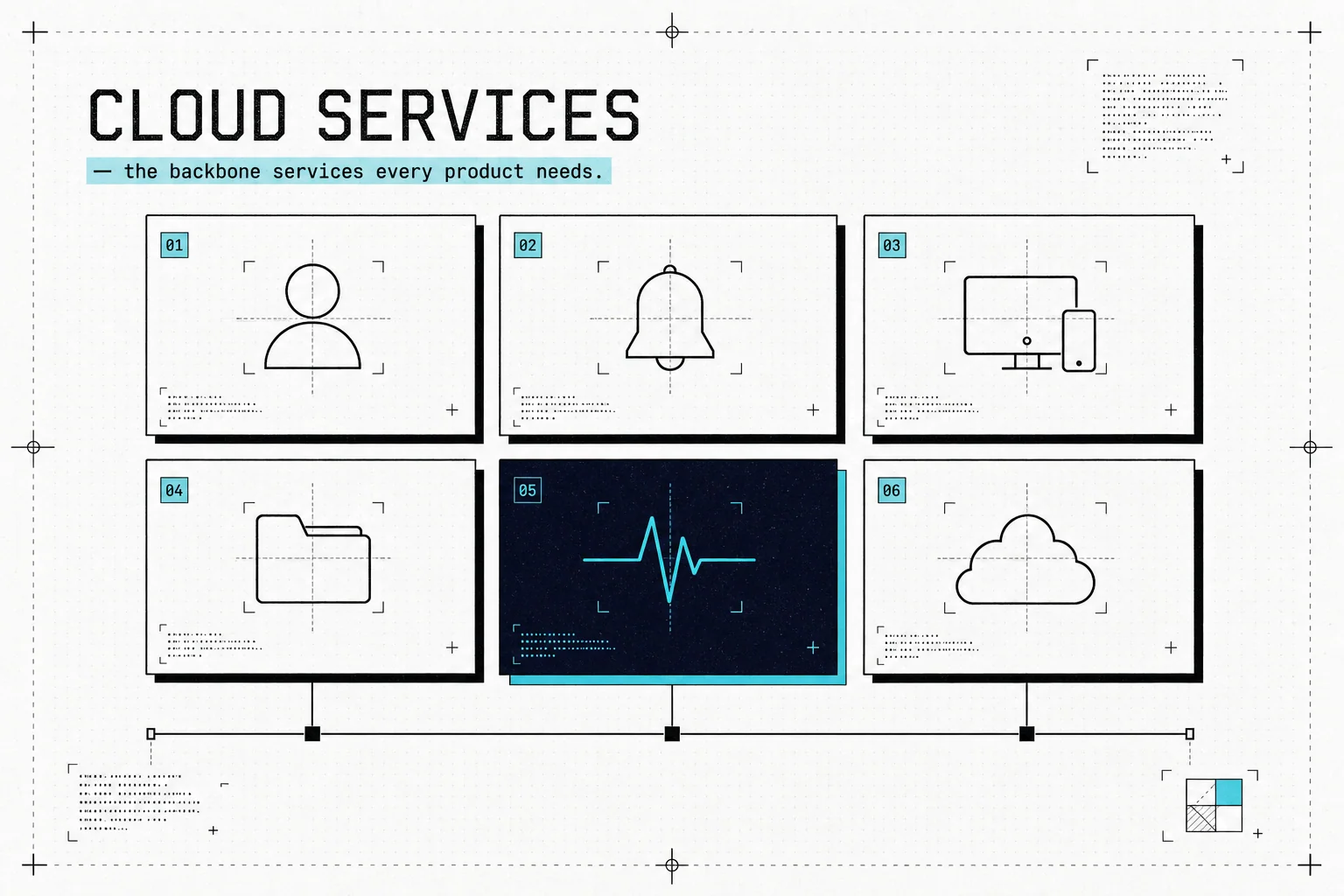
Every serious product ends up rebuilding the same five systems: who is this user, tell them something happened, remember their device, store this file, show me what the system did. None of them are your product. All of them can sink it.
Cloud Services are those systems, managed, and exposed the way everything else in Link Loom arrives: through the dependency graph. Your code asks deps for storage or push notifications; whether that resolves to a local adapter or the managed cloud service is configuration, not code.
Because every service shares the runtime’s conventions — namespaced logging, attributable operations, consistent lifecycles — observability stops being per-product archaeology. One operational signature, from your smallest worker to the platform itself.
// the same graph carries every backbone service
const { storage, pushNotification, console } = dependencies;

await storage.client.upload({
  file: reportBuffer,
  path: 'reports/2026-07/summary.pdf',
});

console.success('Report stored', {
  namespace: '[Billing]::[Reports]',
});Auth, uploads and notifications work on day one. The team builds the product instead of the plumbing under it.
Storage writes to /tmp locally and to a bucket in production. The application code is identical — the adapter is config.
A payment fails. The namespaced logs from the API, the worker and the notification service line up into one story.